
- What Is Voice Commerce AI?
- How Does Voice Commerce Work?
- Why Integrate Voice Commerce AI into Your eCommerce Platform?
- Use Cases of AI Voice Commerce in eCommerce
- Must-Have Features of an AI Voice Commerce-Enabled Platform
- Technologies Used in Voice Commerce AI
- How to Integrate Voice Commerce AI into Your eCommerce Platform
- Challenges in Implementing AI Voice Commerce
- Security and Privacy Considerations in AI Voice Commerce
- Best Practices for AI Voice Commerce Integration
- Future of AI Voice Commerce in eCommerce
- Conclusion
- Frequently Asked Questions (FAQs)
Voice commerce AI is changing how people shop online. It makes buying faster, more natural, and hands free. As voice assistants and AI driven tools become more common, more businesses are looking at how to integrate voice commerce AI into your eCommerce platform without adding friction to the customer experience.
Modern shoppers expect fast and effortless experiences. Typing product names, navigating menus, and applying filters slows them down, especially on mobile. Voice commerce AI removes those extra steps. Customers can search, order, and get support using simple voice commands, creating smoother buying journeys and more opportunities to increase conversions and retention.
This guide explains what voice commerce AI is, how it works, and why it matters for eCommerce businesses. You’ll also learn the key features, challenges, and best practices for integrating voice commerce AI into your eCommerce platform the right way.
What Is Voice Commerce AI?

Voice commerce AI is a technology that allows customers to search for products, place orders, and manage purchases on an eCommerce platform using voice commands. Instead of typing or clicking through multiple screens, shoppers interact with the store by speaking naturally.
When a customer speaks, the system listens, understands the intent, and triggers the right action inside the eCommerce platform. It does not depend on exact keywords or fixed commands. This makes interactions feel more conversational and easier to use.
Unlike basic voice search, voice commerce AI supports the full shopping journey. It connects with product data, inventory, checkout, and customer accounts, allowing customers to move from discovery to purchase without breaking their flow, especially on mobile and voice enabled devices. To understand how this process works in practice, it helps to look at what happens behind the scenes when a customer uses voice to shop online.
How Does Voice Commerce Work?
Voice commerce combines voice recognition and artificial intelligence to understand customer requests and carry out shopping actions within an eCommerce platform. While the interaction feels simple to the user, multiple technologies work together behind the scenes to support each step.

Here’s a breakdown of how the process works:
Step 1: Voice input from the customer
The journey begins when a customer speaks into a voice enabled device or application. This could be a request to search for a product, add an item to the cart, or check prices. For example, a shopper might say, “Find noise cancelling headphones under $150” or “Reorder my usual coffee.”
Step 2: Speech to text processing
The spoken input is converted into text using speech recognition technology. This step ensures the system can accurately interpret different accents, speaking speeds, and natural phrasing, even when users do not follow specific command formats.
Step 3: Understanding intent and meaning
Once the speech is converted, natural language processing analyzes the text to understand what the customer is trying to do. The system distinguishes between browsing, purchasing, or support related requests. For instance, “Add this to my cart” signals a purchase action, while “What’s the best deal today?” indicates a comparison or discovery intent.
Step 4: Contextual analysis using AI
At this stage, the AI evaluates contextual data to deliver more relevant results. This may include past purchases, saved preferences, location, and real time product availability. If a customer frequently buys a specific brand or size, the system can prioritize those options to reduce friction.
Step 5: Action execution within the platform
After the intent is identified, the voice commerce system connects with the eCommerce platform to perform the requested task. This could involve adding items to the cart, suggesting alternatives, or preparing an order for checkout. Recommendations are often tailored based on the customer’s previous behavior.
Step 6: Voice based confirmation
Before completing critical actions, such as placing an order or processing payment, the system confirms the details with the customer. For example, it may ask for confirmation on pricing, delivery method, or payment preference to ensure accuracy and build trust.
Step 7: Secure transaction completion
Once confirmed, the transaction is completed through secure authentication and payment processes. The order is placed, inventory is updated, and the customer receives confirmation, all without needing to switch devices or interfaces.
With a clear understanding of how voice commerce works, the next step is to explore why more eCommerce businesses are choosing to integrate voice commerce AI into their platforms.
Why Integrate Voice Commerce AI into Your eCommerce Platform?
Voice commerce AI is not just about adding a new interaction method. It directly supports business goals related to customer experience, engagement, and long term growth.
To understand its value more clearly, it helps to look at the specific benefits it brings to eCommerce platforms.
Improved shopping convenience
Voice commerce AI allows customers to complete tasks without typing or navigating multiple screens. Searching for products, adding items to the cart, or checking order status becomes faster and more intuitive, especially on mobile devices.
Faster product discovery
Customers can describe what they are looking for in natural language instead of relying on exact keywords. This helps reduce friction during product search and makes it easier for users to find relevant items quickly.
Higher engagement and conversion potential
By guiding customers through conversational interactions, voice commerce AI can reduce drop offs during the buying journey. Timely prompts, confirmations, and recommendations help move users closer to completing a purchase.
Better accessibility and inclusivity
Voice based interactions make eCommerce platforms more accessible to users who may have difficulty typing or navigating traditional interfaces. This expands reach while improving overall usability.
Operational efficiency for businesses
Voice commerce AI can handle routine interactions such as order tracking, reordering, and basic support queries. This reduces the load on customer support teams while maintaining fast response times.
Future readiness in a voice first environment
As voice enabled devices and conversational interfaces continue to grow, integrating voice commerce AI helps future proof your eCommerce platform and stay aligned with changing customer behavior.
Now that the benefits are clear, it’s important to look at the specific use cases where voice commerce AI delivers the most impact in eCommerce.
Use Cases of AI Voice Commerce in eCommerce
AI voice commerce is used to simplify common shopping tasks and reduce friction across the eCommerce journey. It focuses on practical, transactional interactions rather than basic voice search. These practical applications show how AI voice commerce fits naturally into the eCommerce buying process.
Voice based product search and ordering
Customers can find products and place orders using natural voice commands, making discovery and purchasing faster and easier.
Hands free shopping
Voice interactions allow customers to shop without using a keyboard or screen, which is especially useful on mobile devices or while multitasking.
Voice enabled cart and checkout actions
Shoppers can add items to the cart, update quantities, and confirm orders through voice commands, reducing friction during checkout.
Order tracking and support
Customers can check order status, delivery details, or return policies using voice, improving response time and convenience.
Repeat purchases and reordering
AI voice commerce simplifies reordering frequently purchased products, encouraging repeat sales and improving customer retention.
With these use cases covered, the next section looks at the must-have features of an AI voice commerce enabled platform.
Must-Have Features of an AI Voice Commerce-Enabled Platform
Building an effective AI voice commerce experience requires more than simply adding voice input. The platform must be able to understand users accurately, respond naturally, and support secure, end to end shopping interactions.
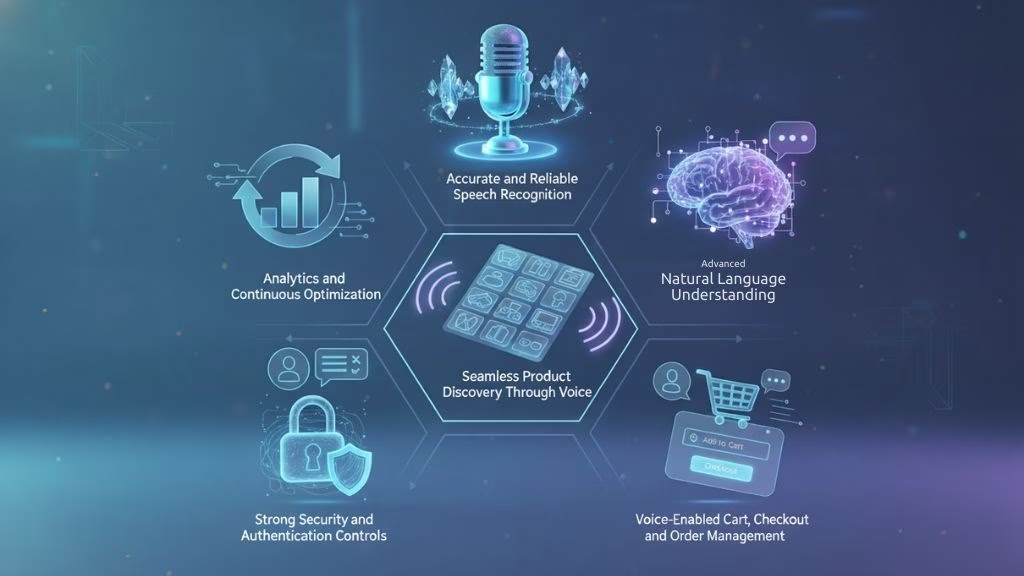
These features ensure that voice commerce works reliably for both customers and businesses:
Accurate and reliable speech recognition
At the foundation of AI voice commerce is the ability to accurately capture spoken input. The platform should recognize different accents, speaking styles, and pronunciations while maintaining consistent performance. High accuracy reduces errors and helps users feel confident using voice based interactions.
Advanced natural language understanding
Understanding intent is just as important as recognizing words. Natural language understanding allows the system to interpret conversational requests, follow context across multiple interactions, and respond appropriately even when users change how they phrase a request.
Seamless product discovery through voice
An AI voice commerce platform should support conversational product searches that feel natural to users. Customers should be able to describe what they want, apply filters such as price or category, and compare options using voice without relying on exact keywords or traditional navigation.
Voice enabled cart, checkout, and order management
Voice interactions should extend across the entire shopping journey. This includes adding and removing items from the cart, confirming order details, selecting delivery options, and completing checkout. Integration with order management systems ensures a smooth and consistent purchasing flow.
Strong security and authentication controls
Security plays a critical role in voice based commerce. Platforms must support secure authentication methods, protected payment workflows, and safeguards against unauthorized access. These measures help protect customer data and build trust in voice enabled transactions.
Personalization and contextual responses
AI voice commerce platforms perform best when they adapt to individual users. By using purchase history, preferences, and real time context, the system can deliver more relevant responses, faster repeat purchases, and better overall experiences.
Analytics and continuous optimization
To improve over time, platforms need insight into how users interact through voice. Analytics help track usage patterns, identify friction points, and measure the impact of voice commerce on conversions and engagement.
Behind these features is a set of core technologies that make AI voice commerce possible in real eCommerce environments.

Technologies Used in Voice Commerce AI
AI voice commerce relies on a combination of technologies that work together to understand voice input, interpret intent, and connect conversations to real eCommerce actions. Each technology plays a specific role in delivering accurate and reliable voice based shopping experiences.
Automatic speech recognition
Automatic speech recognition converts spoken language into text that systems can process. It is responsible for capturing voice input accurately, even when users speak with different accents, tones, or speeds. Strong speech recognition is essential for minimizing errors and ensuring smooth interactions.
Natural language processing
Natural language processing allows the system to understand the meaning behind the words, not just the words themselves. It helps interpret conversational queries, identify intent, and handle variations in how users phrase requests. This is what makes voice interactions feel natural rather than command driven.
Machine learning and AI models
Machine learning models power continuous improvement in voice commerce systems. They learn from user interactions, refine intent recognition, and improve recommendations over time. These models help the platform adapt to changing customer behavior and preferences.
Conversational AI frameworks
Conversational AI frameworks manage dialogue flow and responses. They ensure the system can handle follow up questions, confirmations, and multi step interactions without losing context. This is critical for guiding users through shopping tasks like product selection and checkout.
Integration with eCommerce systems and APIs
Voice commerce AI must connect directly with product catalogs, inventory systems, pricing engines, payment gateways, and order management tools. APIs enable these integrations, allowing voice commands to trigger real actions such as adding items to a cart or placing an order.
Cloud infrastructure and scalability
Most voice commerce solutions rely on cloud infrastructure to process voice data, run AI models, and scale with demand. Cloud based systems ensure consistent performance during peak traffic while supporting real time responses.
With the underlying technologies in place, the next step is understanding how to bring everything together through a structured integration process.
How to Integrate Voice Commerce AI into Your eCommerce Platform
Integrating AI voice commerce into an eCommerce platform requires a structured approach. The goal is not just to enable voice commands, but to ensure they work smoothly with your existing systems, data, and customer journeys. Below is a practical way to approach the integration process.
Define clear business goals and use cases
Start by identifying what you want voice commerce to achieve. This could include faster product discovery, simplified reordering, improved customer support, or higher mobile conversions. Clear goals help determine which voice features to prioritize and how success will be measured.
Choose the right voice commerce solution
Next, decide whether to use a third party voice commerce platform or build a custom solution. This decision depends on factors such as your technical resources, scalability needs, supported languages, and how deeply voice needs to integrate with your existing eCommerce stack.
Prepare your eCommerce data and systems
Voice commerce depends heavily on clean and well structured data. Product names, descriptions, categories, pricing, and inventory must be accurate and easily accessible through APIs. Ensuring your backend systems are integration ready reduces errors during voice interactions.
Design voice first user experiences
Voice interactions should be designed differently from text based ones. Focus on natural language, short responses, and clear confirmations. Plan how the system will handle follow up questions, errors, and ambiguous requests to keep conversations smooth.
Integrate voice with core eCommerce workflows
Connect the voice interface with essential workflows such as product search, cart management, checkout, payments, and order tracking. This step ensures voice commands can trigger real actions rather than acting as a standalone feature.
Test, refine, and optimize continuously
Before launch, test the system with different voice inputs, accents, and scenarios. Monitor how users interact with voice features and refine responses over time. Continuous optimization is key to improving accuracy and user trust.
Once the integration is in place, businesses need to be aware of the challenges that can affect how effectively AI voice commerce performs in real world use.
Challenges in Implementing AI Voice Commerce

While AI voice commerce offers clear benefits, implementing it comes with challenges that businesses need to plan for early.
Voice recognition accuracy
Accents, background noise, and unclear phrasing can affect how accurately voice commands are understood. If responses are inconsistent, users may lose trust in the system.
Handling complex product catalogs
Large catalogs with similar product names, variations, or technical specifications can be difficult to manage through voice alone. Without proper structure, voice search results may feel limited or inaccurate.
User trust and adoption
Some customers may hesitate to use voice for shopping, especially for payments. Building trust through confirmations, transparency, and reliable performance is essential for adoption.
Integration complexity
Connecting voice commerce AI with existing eCommerce systems such as inventory, payments, and order management can be technically demanding, particularly for legacy platforms.
Addressing these challenges early makes it easier to deliver reliable voice experiences that customers are comfortable using.
Best Practices for AI Voice Commerce Integration
Following best practices helps ensure that AI voice commerce delivers real value rather than becoming a novelty feature.
Keep interactions simple and clear
Design voice conversations around short, direct responses. Avoid overwhelming users with too many options at once and guide them step by step when needed.
Optimize product data for voice search
Use clear product names, structured attributes, and consistent categories. Well organized data improves how accurately products are surfaced through voice queries.
Design for confirmation and error handling
Always confirm important actions like adding items to the cart or placing orders. Provide clear fallback responses when the system does not understand a request.
Continuously train and refine the system
Voice commerce improves over time when models are trained on real interactions. Monitoring usage patterns helps refine intent recognition and responses.
Once best practices are in place, security and privacy become the next critical consideration for voice based shopping.
Security and Privacy Considerations in AI Voice Commerce
Security and privacy are essential for building trust in AI voice commerce, especially when financial transactions are involved.
Protecting voice data
Voice inputs can contain sensitive information. It’s crucial to ensure that voice data is securely processed and stored, with encryption in place during both transmission and storage. Clear policies must also be established regarding data usage and retention, giving customers confidence in how their data is handled.
Secure authentication and payments
To prevent unauthorized transactions, voice-based systems should implement secure authentication methods, such as voice biometrics, device-level security, or multi-factor authentication (MFA). This ensures that only authorized users can complete purchases.
Regulatory compliance
Compliance with data protection regulations like GDPR or CCPA is essential. Businesses should provide transparency to customers about how their voice data is collected, used, and stored, and offer mechanisms to delete or modify data when requested. This helps maintain privacy and regulatory compliance.
With strong security measures in place, businesses can focus on how AI voice commerce will evolve in the future.
Future of AI Voice Commerce in eCommerce

AI voice commerce is expected to become more sophisticated as conversational AI continues to improve.
Voice interactions will become more personalized, context aware, and seamlessly integrated across devices. Instead of isolated commands, voice commerce will support longer, more natural conversations that adapt to user preferences in real time.
As voice enabled devices and multimodal experiences grow, AI voice commerce will play a larger role in omnichannel strategies, connecting online stores, mobile apps, and smart devices into a unified shopping experience.
Businesses that invest early will be better positioned to adapt as voice becomes a standard way customers interact with digital platforms.
Conclusion
AI voice commerce is reshaping how customers search, shop, and interact with eCommerce platforms. By enabling hands free, conversational experiences, it reduces friction and creates more intuitive buying journeys.
Successfully integrating AI voice commerce requires more than adding voice commands. It involves the right features, technologies, security measures, and a clear integration strategy aligned with business goals.
As customer expectations continue to evolve, learning how to integrate voice commerce AI into your eCommerce platform can help you stay competitive, improve user experience, and prepare for a more conversational future of online shopping.
Frequently Asked Questions (FAQs)
What is AI voice commerce in eCommerce?
AI voice commerce uses artificial intelligence and voice recognition to enable customers to search for products, place orders, and complete purchases using spoken commands, instead of typing or clicking. It provides a hands-free shopping experience through devices like smart speakers, smartphones, and virtual assistants.
How does AI voice commerce work in an online store?
AI voice commerce operates by converting spoken commands into text via speech recognition, then using natural language processing (NLP) to interpret the meaning. The system then interacts with the eCommerce platform to find products, update carts, or complete orders through voice commands, streamlining the shopping process.
What devices support AI voice commerce?
AI voice commerce works on voice-enabled devices such as Amazon Alexa, Google Assistant, Apple Siri, and smartphones with integrated virtual assistants. These devices leverage built-in AI to understand spoken commands and connect with eCommerce platforms for seamless shopping experiences.
How secure are voice commerce transactions?
Voice commerce transactions are secured through encryption, voice authentication, and adherence to payment security standards like PCI-DSS. To further reduce fraud, systems often incorporate voice biometrics alongside multi-factor authentication (MFA), ensuring a safe and secure payment process.
What are the key benefits of AI-powered voice commerce?
AI voice commerce offers several advantages, including faster, hands-free shopping, personalized product recommendations, and 24/7 convenience. It simplifies the process of product discovery, speeds up checkout, and improves overall customer satisfaction, helping eCommerce businesses meet modern consumer expectations.
How do I optimize my eCommerce site for voice commerce?
To optimize your site for voice commerce, structure your product data with conversational keywords, clear product names, and detailed attributes. This ensures voice AI can accurately interpret customer requests. Also, keeping real-time product availability and pricing accurate helps voice assistants deliver precise results.
Can voice commerce handle complex orders and variations?
Yes, advanced AI voice commerce systems can handle complex orders, product variations, and contextual queries by combining natural language understanding (NLU) with real-time access to product catalogs. If more details are needed, the system can ask follow-up questions to clarify the user’s intent.
Will voice commerce replace traditional eCommerce search?
Voice commerce complements traditional eCommerce search rather than replacing it. It offers an additional, convenient method for customers to search and make purchases, particularly on mobile devices or smart speakers, where typing may be cumbersome.
What are the challenges of using AI voice commerce?
The main challenges with AI voice commerce include speech recognition accuracy, managing product data for conversational queries, ensuring security, and addressing user privacy concerns. With proper design, testing, and ongoing optimization, these challenges can be mitigated to ensure a smooth and effective user experience.
How does AI voice commerce improve customer engagement?
AI voice commerce boosts customer engagement by offering conversational shopping experiences, personalized recommendations, and intuitive interactions that feel natural. By streamlining the buying process and offering tailored suggestions, it enhances customer loyalty and encourages repeat purchases
This page was last edited on 14 January 2026, at 9:58 am
How can we help you?


